
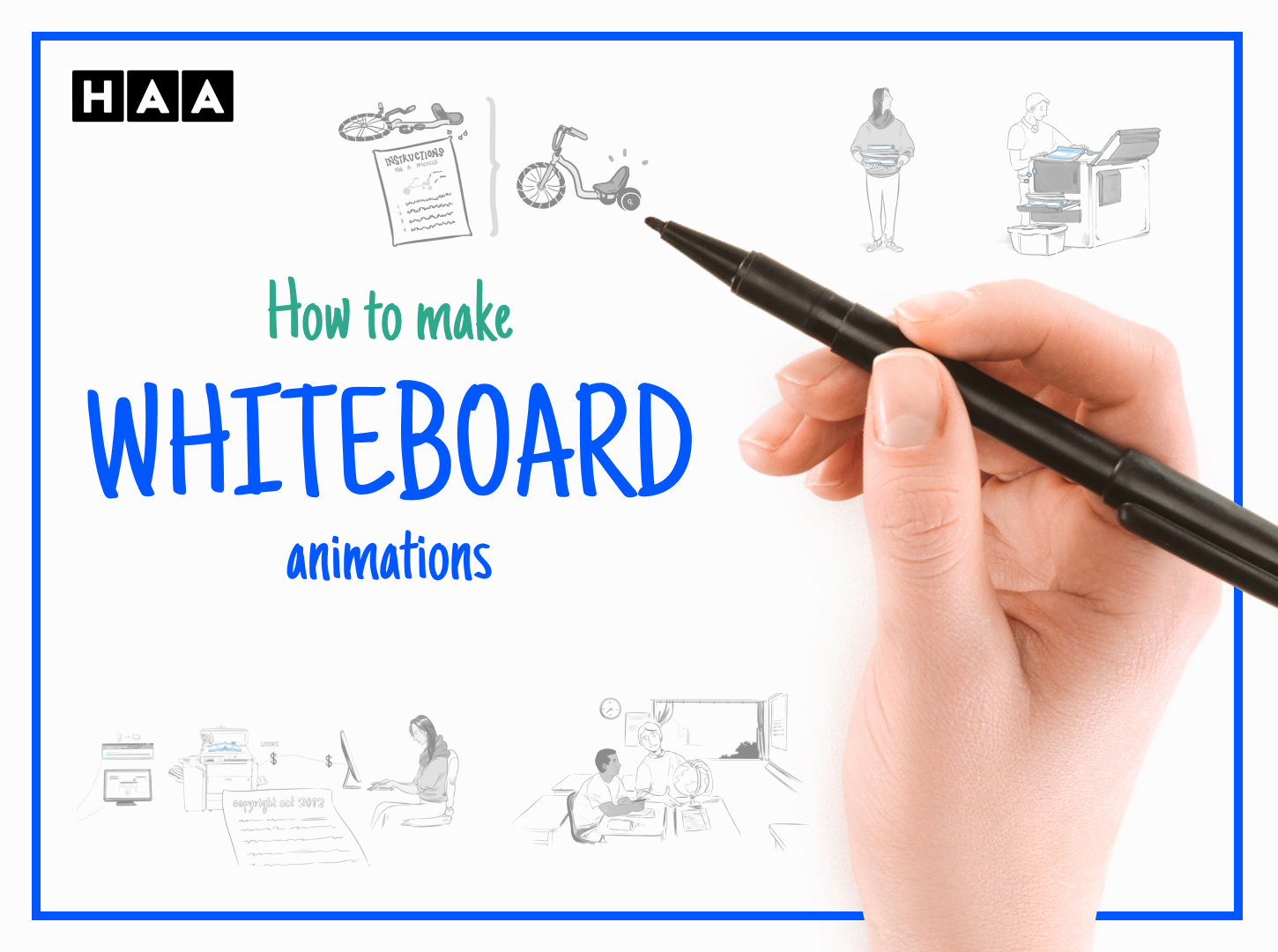
So, what’s a whiteboard animation video, exactly? It’s a type of explainer video where drawings seem to magically come to life, right in front of your eyes. Think of it like watching a teacher sketch out a concept on the board—simple, direct, and actually pretty mesmerizing. Using a mix of hand-drawn illustrations and a voiceover to walk you through an idea, one step at a time.
Whiteboard animations have become a go-to for educators, and nonprofits because they’re super effective at simplifying complex concepts. If you’ve ever found yourself lost in the jargon of tech or healthcare, a whiteboard animation could be your lifeline.
A major reason Whiteboard animation is so effective is that our brain doesn’t totally differentiate between drawing and watching others draw, improving memory retention and understanding.
Why are Whiteboard Animation Videos effective?
Watching others draw increases memory retention, making drawing videos more effective at teaching, exploring complex ideas and changing minds in advocacy work.
Comparing brain scans during the act of drawing vs watching others draw, studies have found that many of the same areas of the brain light up. The major difference being the motor areas of the brain are replaced by mirror neurons.
Mirror neurons are the brain cells that enable us to learn how to do an action simply by watching others.
Circling back to memory retention. Mirror neurons allow the brain to process an action as though we were performing it ourselves. If you have ever taken notes during a meeting or lecture with no intention of reviewing them, then you’re familiar with this process. The action of writing down important information stimulates the mind to remember it later.
As a result, drawing videos are effective and popular for education videos, advocacy videos and a wide swathe of other needs around complexity and making ideas sticky.
What does a Whiteboard Animation Video look like?
Whiteboard animation videos tend to have that clean, black-and-white look, with each image appearing as if it’s being drawn in real time. This style draws viewers in, making the content feel both dynamic and interactive—perfect for breaking down tricky topics without unnecessary distractions. Some videos throw in a splash of color here and there to emphasize a point, but for the most part, the aesthetic stays simple and to the point.
Sometimes people refer to these as “live drawings,” because the hand that’s drawing gives it a teacher-in-a-classroom vibe. You’ll often see characters, symbols, and simple metaphors to make complicated ideas easier to grasp. Imagine a healthcare video that explains a complex treatment using icons like stethoscopes or EKG lines—suddenly, it’s not as overwhelming.
By illustrating ideas alongside complex terms, we’re able to connect esoteric ideas to the real world” – Devin Smith (President, Hello Adventure Animation)
For a great example, check out Hello Adventure Animation’s whiteboard animated videos that promote educational content. They use whiteboard animations to break down dense topics like education and healthcare, making it all feel surprisingly easy to follow.
Crafting the Script for Whiteboard Animation
Writing a script for a whiteboard animation video is all about balancing what’s said with what’s drawn.
It’s best to write the script before talking about the visuals. As important as the visuals are, the narration tends to do most of the lifting, delivering most of the information, context, engagement and emotional connection. The most impactful whiteboard animations use visuals to enhance what is being said as opposed to presenting a literal representation with a visual. You can read more about that here.
The message is best served when the visuals show another dimension of what is being said as opposed to delivering the same message. This is because your brain is processing the images with a different system than the audio, back to scripts.
The language? Keep it simple. You want short, clear sentences so viewers can follow along easily—even if they’re new to the topic. And pacing is key!
You want to manage cognitive load for the viewer. That sounds complex, but it’s pretty simple. How much are you asking for their working memory to store? How hard are you making them work to understand the idea? It’s your job to make it easy to follow, not their job to follow along. If you give them too much information at a time their working memory will get full, and they will bounce.
Take Coca Cola’s video. they used whiteboard animation to show that Coca-Cola is aware of industry changes and their new approach to content in 2020.
What Music should I use for my whiteboard animation video?
Though whiteboard animations are mainly driven by visuals and narration, a little background music can help set the vibe. Sites like Envato Elements, Artlist.io, or Adobe offer royalty-free tracks, though they come with a price tag. For free options, Pixabay is a solid go-to. Just make sure to check usage guidelines, as they vary for each track and artist.
Sometimes, subtle sound effects can also add flavor. A quick “ding” for a light bulb moment or a soft “whoosh” for transitions can make the video feel more engaging. But remember, in whiteboard animations, less is more—too many sound effects can easily take away from the main message.
Check out Udemy’s course on explainers: they nail it with light background music and occasional sound effects, adding energy without pulling focus away from the educational content.
Why should I create a Whiteboard Animation Video?
Whiteboard animations aren’t just fun to watch—they’re also highly effective for a variety of needs. Here’s why:
1. Simplifying Complex Ideas
Whiteboard animations break down complicated concepts into visually engaging, step-by-step illustrations. This method makes information easier to understand and retain, which is especially useful for educational content or technical product explanations.
Healthcare institutes use whiteboard animation to explain these complex terms. For example, explaining medical conditions, different treatments or procedures. By combining visuals with clear narration, they can communicate essential health information in a way that is accessible to a wide audience.
2. Boosting Audience Retention
We process visuals faster than text, so illustrations speeds up comprehension and makes the content more memorable. Pairing visual progression and narrative keeps viewers engaged, increasing the likelihood that they’ll watch the video to the end.
Financial services often explain investment concepts, budget planning, or retirement savings using whiteboard videos. It’s a perfect fit. The engaging nature of these videos helps hold the audience’s attention longer, making it easier to convey detailed financial information, while also making it easier to grasp the concepts
3. Enhancing Brand Personality
Whiteboard animations provide a creative way to showcase a brand’s personality and approachability. The storytelling aspect of these videos allows brands to connect with viewers on a personal level, creating a memorable impression that’s often harder to achieve through traditional advertising.
A big part of this is carefully choosing the voice of your video, and what the art style. What does the art say about your brand? How does it connect with the target audience? Avoid stock art where possible.
Retailers or e-commerce business use whiteboard animations to explain their customer service process, return policies, or unique product features. The friendly, casual tone often associated with whiteboard animation makes the brand feel more approachable and customer-focused.
B2B companies use whiteboard animation for that sense of ease and connection reducing perceived friction in the buying process, by showing how easy their process is. They also reduce friction in their sales funnel by managing expectations around complexity, by showing how simple the complex really is.
4. Cost-Effective Production
Compared to live-action videos, whiteboard animations are often more affordable to produce, making them a practical choice for small businesses and startups. They don’t require location shoots, actors, or complex post-production, which keeps costs down while delivering a high-quality final product.
Startups, particularly in the tech industry, often turn to whiteboard animations to introduce new apps or services. This approach allows them to effectively convey their message without needing a big-budget production.
5. Versatility Across Platforms
Whiteboard animations are versatile and work well on various platforms, from websites and social media to email marketing and presentations. They can be shared across multiple channels, increasing the reach of your message and making it easy for audiences to engage with your brand.
A nonprofit organization might use whiteboard animations on their social media channels to explain their mission or showcase impact stories, reaching a broader audience while keeping production simple.
Nonprofits, tech startups, healthcare companies, you name it—whiteboard animations are popular across industries for their ability to deliver information in a way that’s easy to digest and hard to forget. And they don’t have to break the bank. With Hello Adventure Animation, we’ve seen first-hand how effective these videos can be for everything from nonprofit outreach to healthcare education.
If you’re interested in learning more about whiteboard animation videos or other animation styles, we’d love to hear from you as our studio Hello Adventure Animation has specialized in whiteboard animation videos and other styles for nearly a decade. From nonprofits, to healthcare institutes – we’re able to support your team and illustrate your complex messages to a wide audience.